

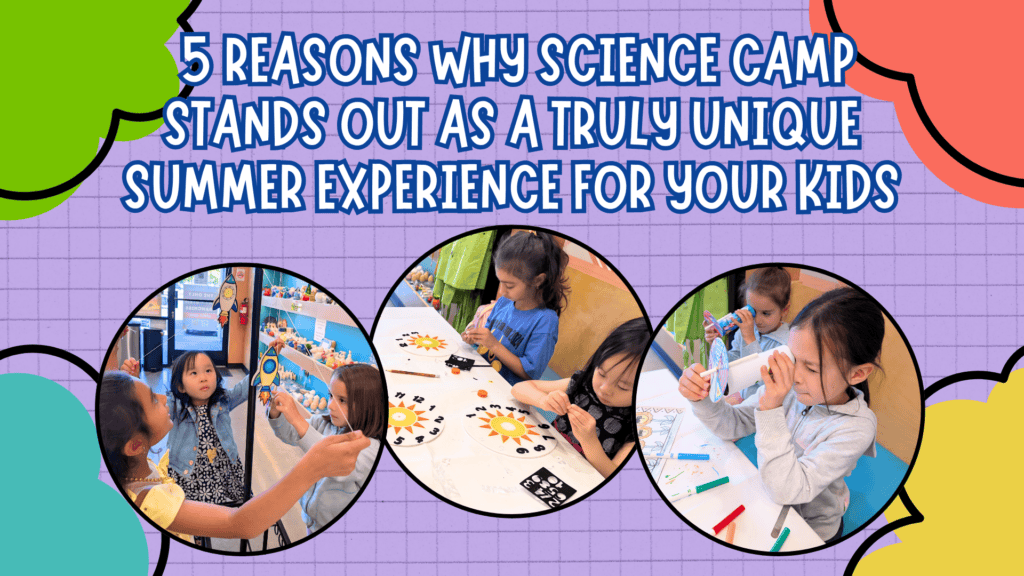
Not all summer camps are created equal. While many focus on play, sports, or traditional arts, a science camp offers something fundamentally different. It blends curiosity, creativity, and real-world discovery into one experience. For kids, it feels like play, but underneath, it is building a way of thinking that stays with them long after summer ends.
1. It Turns Curiosity Into Action
Most kids are naturally curious. They ask questions constantly-why things happen, how things work, what causes change. A science camp does not just answer those questions. It gives kids the tools to explore the answers themselves.
Instead of being told information, children:
- Test ideas through experiments
- Observe outcomes in real time
- Learn by doing, not just listening
This shift, from passive learning to active discovery, is what makes science camp stand out.
2. It Combines Fun With Real Understanding
Unlike camps where activities are purely recreational, science camp has a dual advantage. Every activity is designed to be enjoyable, but also meaningful.
Mixing colorful liquids, building simple projects, or creating reactions might feel like play, but each activity introduces:
- Basic chemistry and physics concepts
- Cause-and-effect relationships
- Logical thinking patterns
Kids are not just entertained. They are developing a deeper understanding of the world around them without even realizing it.
3. It Builds Problem-Solving Skills Early
One of the most valuable aspects of a science camp is how it encourages kids to think independently. Experiments do not always go as planned, and that is part of the experience.
Children learn to:
- Adjust and try again
- Ask better questions
- Analyze what went wrong and why
This trial-and-error process builds resilience and confidence, skills that go far beyond science.
4. It Engages Different Types of Learners
Science camp is especially powerful because it reaches kids who may not thrive in traditional settings. For children who prefer hands-on activities over reading or lectures, this environment can unlock their potential.
It supports:
- Visual learners who benefit from seeing results
- Kinesthetic learners who need to touch and build
- Curious thinkers who enjoy experimenting
Because of this, many kids who might feel unsure in a classroom setting gain confidence in a science-focused environment.
5. It Feels Like Play, But Builds Future Skills
Perhaps the most unique aspect of a science camp is that it prepares kids for the future without pressure. Skills like critical thinking, observation, and experimentation are introduced naturally through fun activities.
There are no heavy expectations, yet children walk away with:
- A stronger sense of curiosity
- Improved problem-solving ability
- Confidence in exploring new ideas
Where to Experience This Kind of Camp
For parents looking to give their children a summer experience that is both fun and meaningful, science camp is one of the most unique options available.
Studios like Creatif Art & STEM Studio offer hands-on science camps designed specifically for younger learners. Their approach focuses on making science exciting, accessible, and engaging through real experiments and guided exploration.
It is not about turning kids into scientists overnight. It is about giving them the confidence to ask questions, explore freely, and discover how the world works-one experiment at a time. Visit www.creatif.com to learn more and reserve your spot now.